
The convergence of Information Technology (IT) and Operational Technology (OT) has been at the center of industrial transformation for over two decades. Since the unveiling of Industry 4.0 in 2011, the vision of connecting enterprise systems with plant-floor operations has promised smarter factories, optimized supply chains, and reduced downtime.
This conversation has expanded over the past five years to include Engineering Technology (ET), with IT-OT-ET convergence emerging as a hot topic in the push toward unified industrial systems. While this broader integration represents the future of digital transformation, this blog will focus specifically on IT-OT convergence, including its definition, the obstacles that hinder its progress, and strategies to overcome them.
Although IT/OT convergence has been discussed and gradually implemented for more than a decade, the pace has accelerated thanks to recent technological breakthroughs, most notably the rapid advances in AI. By dismantling silos and ensuring data is high-quality, relevant, and contextualized, IT-OT convergence delivers a holistic view of operations. And it goes beyond technology; it enables measurable business outcomes, from faster time-to-market to more efficient resource utilization.
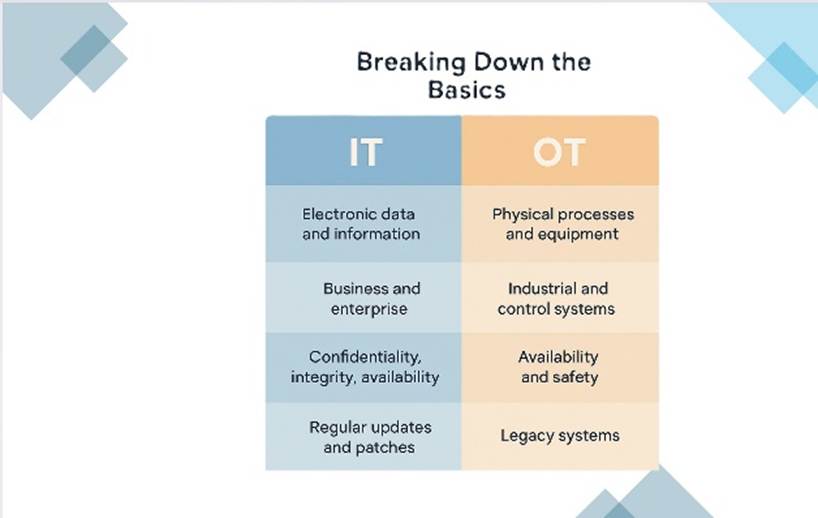
IT vs. OT — Breaking Down the Basics
To fully appreciate the importance of convergence, it is worthwhile to examine the distinct roles of IT and OT, as well as why their differences have historically made integration a challenge.
Information Technology (IT) forms the backbone of most organizations, responsible for managing and processing electronic data. This includes everything from email and databases to enterprise applications and network security. At its core, IT focuses on the confidentiality, integrity, and availability of data, ensuring information is accessible, protected, and governed by consistent policies. Systems are regularly updated and patched to maintain compliance and security.
Operational Technology (OT), by contrast, is embedded in the physical world. It encompasses the systems that monitor and control industrial processes in sectors such as manufacturing, energy, and transportation. These are the systems that keep machinery running, manage power grids, or monitor pipelines. OT’s priorities are availability and safety, ensuring reliable output, worker protection, and minimal downtime. Yet OT environments often rely on legacy systems, many of which run on outdated platforms and older protocols without encryption or authentication, leaving them vulnerable to cyber threats (see last week’s blog). Updates are less frequent because even short disruptions can halt production.
Beyond priorities, IT and OT also differ in their operational requirements:
– Real-time data processing: OT demands deterministic, microsecond-level response times, while IT systems typically operate with longer tolerances.
– Reliability: OT networks must support continuous, uninterrupted operations for critical infrastructure, whereas IT can schedule maintenance windows.
– Network protocols: OT systems often use proprietary, purpose-built protocols for real-time communication, while IT relies on standardized networking protocols designed for data transmission and business connectivity.
These differences highlight why bridging IT and OT has historically been difficult, yet they also underscore why true convergence can be so powerful.
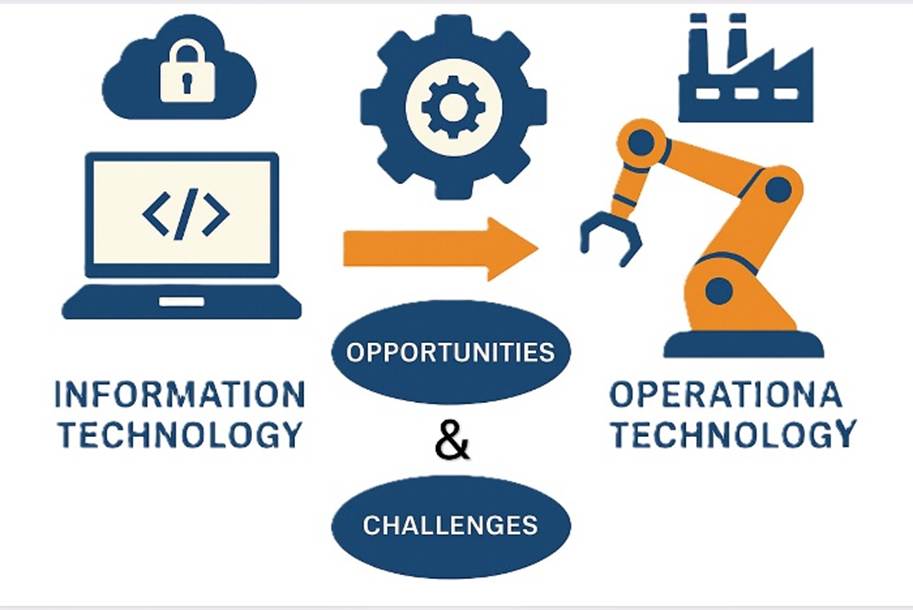
IT/OT Convergence: Opportunities and Challenges
IT/OT convergence is the complex process of closely linking and integrating Information Technology (IT) systems with Operational Technology (OT) systems. According to a CIO Magazine article, How IT and OT are Merging: Opportunities and Tips (May 23, 2025), the responsibility for driving this transformation often falls on leadership, but in different ways. In 61% of surveyed companies, the CIO leads IT/OT convergence, while fewer than a quarter have adopted a joint management approach between IT and OT leaders. In more than 10% of organizations, the responsibility remains undefined.
Despite these variations, companies broadly agree on the benefits. Enhanced security and cost savings are seen as the most significant opportunities; however, the advantages extend beyond these. One of the most valuable outcomes of convergence is greater access to production-related data. Data that was once difficult to process or monetize can now be leveraged to unlock efficiencies, fuel innovation, and create new revenue streams. With consistent, end-to-end data flows, from supplier to customer, organizations can continuously improve existing products and deliver greater value to the market.
However, convergence does not come without challenges. The integration of IT and OT systems introduces new complexities that organizations must address to achieve success:
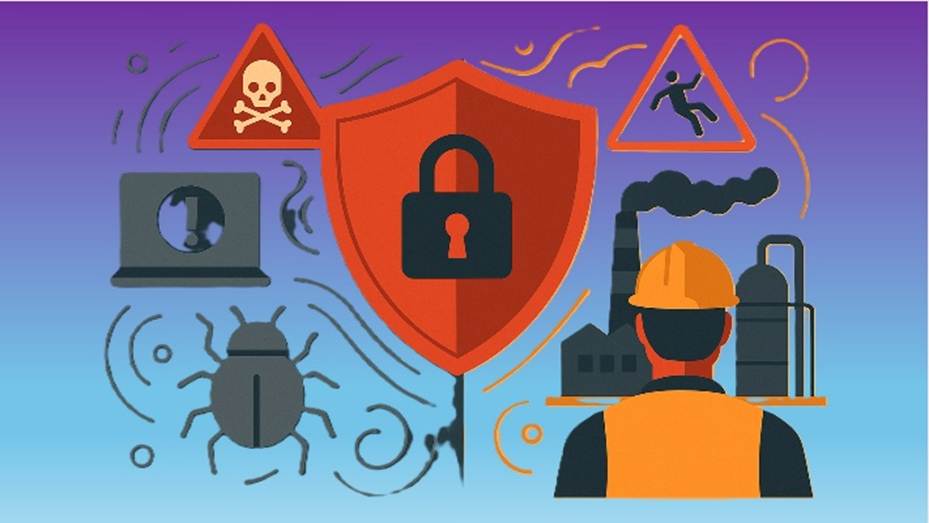
Cybersecurity and Safety Challenges
- Expanded Attack Surface: Connecting previously isolated OT systems and devices to IT networks increases exposure to cyber threats, requiring specialized protection strategies.
- Legacy System Vulnerabilities: Older OT systems often lack modern security features, making them especially difficult to secure without upgrades or compensating controls.
- Operational Safety Risks: In converged environments, a cyber incident is not just a digital event; it can impact worker safety, production uptime, and even critical infrastructure.
- Complex Threat Detection: Effective monitoring must account for both IT-based cyber threats and OT-specific operational impacts, requiring integrated security solutions.
Integration and Compatibility Barriers
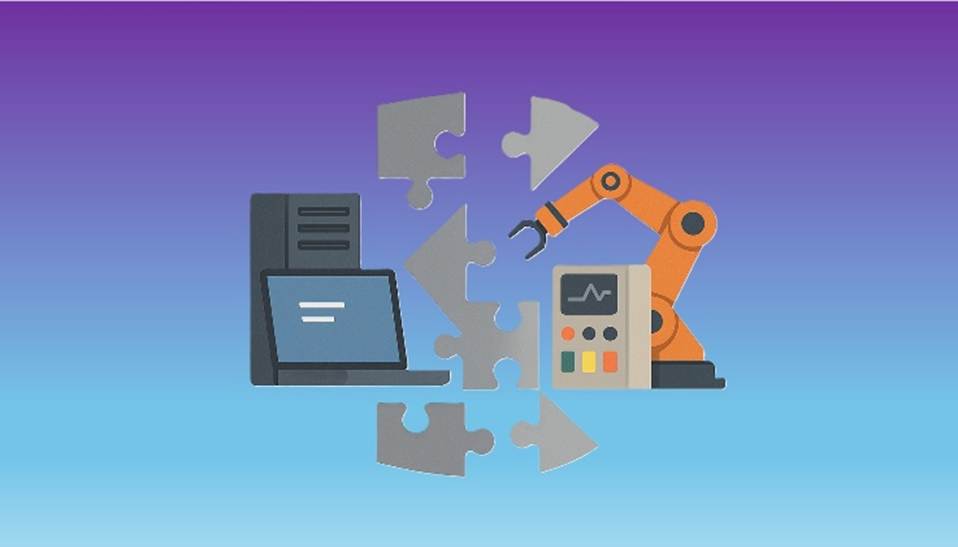
- Protocol Differences: OT and IT often rely on different communication protocols and data formats, demanding translation layers or gateway solutions.
- Timing Requirements: OT systems demand real-time, deterministic responses, while IT systems are more tolerant of latency, making integration a technical challenge.
- Reliability Standards: OT devices must maintain near-constant availability, while IT systems typically allow for maintenance windows, creating differing design expectations.
- Skill Gaps: True convergence requires talent fluent in both IT and OT domains. This often means extensive cross-training, new hiring strategies, and knowledge transfer programs.
Overcoming the Challenges of IT/OT Convergence
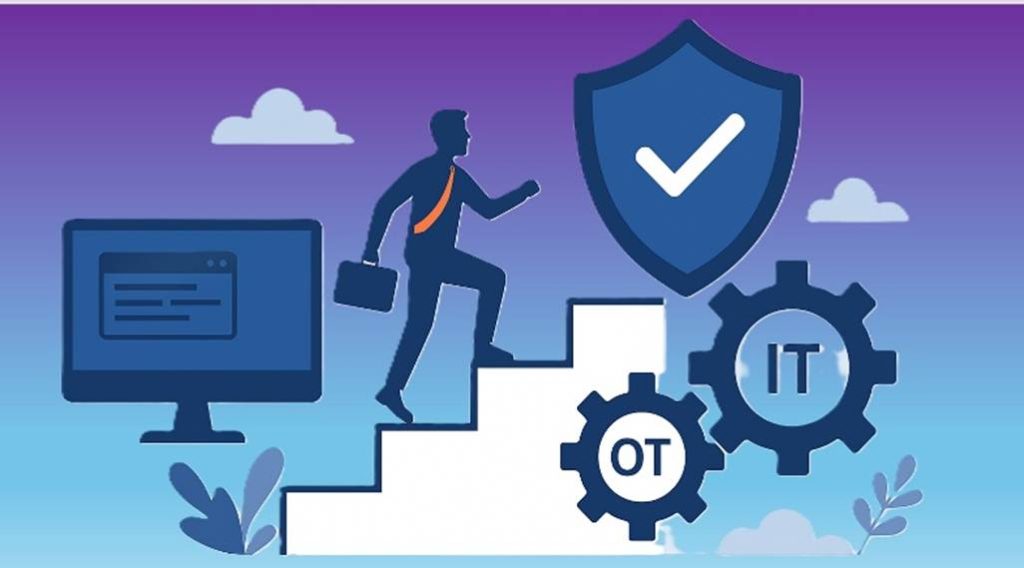
Successfully navigating IT/OT convergence requires more than just connecting systems; it demands a clear roadmap that addresses technological, organizational, and cultural barriers. The goal is to build a resilient, secure, and efficient operational model.
Key strategies include:
– Strengthen Collaboration: Create cross-functional teams that align IT and OT goals, break down silos, and foster a unified approach.
– Prioritize Cybersecurity: As convergence removes traditional air gaps, adopt unified security strategies with risk-informed programs, network segmentation, secure remote access, and integrated monitoring. Regulatory frameworks, such as IEC 62443, NIS2, TSA, and CISA guidelines, now make compliance a non-negotiable requirement.
– Integrate Systems and Data: Overcome protocol and format differences by investing in platforms and tools that enable interoperability. This unlocks real-time analytics, better visibility, and automation.
– Manage Legacy Systems: Replace where feasible, but often a phased modernization approach is the best option. Incremental upgrades, virtual patching, or bridging with edge technologies like ADISRA SmartView provide security and modernization without disrupting operations.
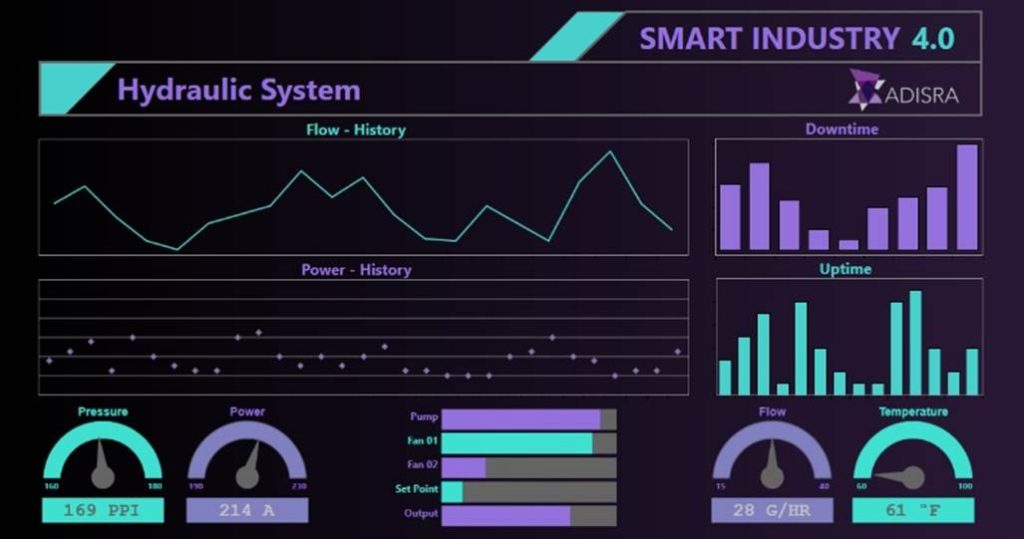
– Enable Secure Remote Monitoring: Leverage SCADA platforms, such as ADISRA SmartView, for secure visibility, encrypted communications, and direct access to industrial devices—critical for troubleshooting and making real-time decisions.
Future Trends in IT/OT Convergence
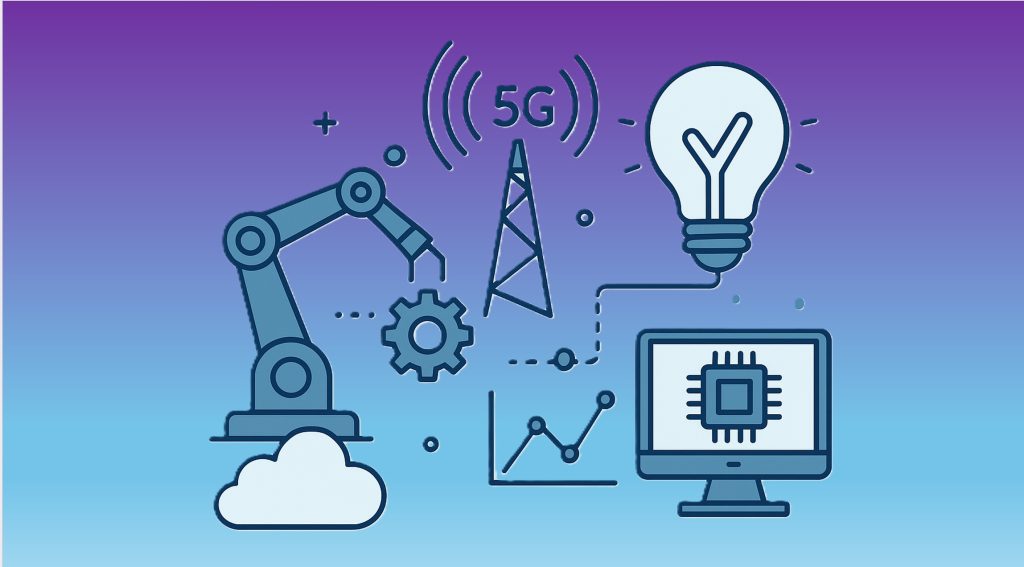
– AI & Machine Learning: Driving autonomous optimization, predictive maintenance, and adaptive control.
– Advanced Analytics: Enabling better quality control, process efficiency, and operational insights.
– Edge Computing & new protocols such as 5G: Supporting ultra-low latency, massive device connectivity, and real-time responsiveness at scale.
Conclusion
IT/OT convergence is more than a technical initiative—it’s a transformative opportunity to revolutionize industrial operations. By integrating control systems, enabling real-time data analytics, and providing unified operational visibility, convergence empowers organizations to achieve higher efficiency, stronger safety, and smarter, data-driven decision-making that translates into real competitive advantage.
Real success, however, requires strategic planning, robust security, and comprehensive integration that respects the unique requirements of both IT and OT. Secure connectivity is crucial for ensuring seamless integration without compromising reliability or safety in critical industrial environments.
At ADISRA, we help companies bridge the gap between IT and OT with ADISRA SmartView, a HMI/SCADA platform that simplifies integration, enhances visibility, and secures operations across both modern and legacy systems. With its built-in rule-based expert system, ADISRA SmartView goes beyond visualization, enabling predictive insights and decision support. Combined with AI, this approach can automate inspections, maintenance, and troubleshooting, detect anomalies, and predict equipment failures, delivering the kind of intelligent operations that define the future of industrial automation.
Download a free trial of ADISRA SmartView to see convergence in action.
Request a personalized demo here and discover how we can accelerate your IT/OT journey.
Tips, Tricks, and Hidden Treasures in ADISRA SmartView
October 30th, 2025, at 9:30 am CDT/9:30 AM COT/2:30 pm GMT/9:30 pm WIB
Discover the hidden features inside ADISRA SmartView that can save you time, simplify your workflow, and make application development easier than ever. In this webinar, our expert will guide you through lesser-known tools, shortcuts, and best practices that are often overlooked but can significantly impact productivity and project success. Whether you are new to ADISRA SmartView or an experienced developer, you will come away with practical tips and tricks to build smarter, faster, and more efficient applications.
Secure your spot today: Register Here
ADISRA®, ADISRA’S logo, InsightView®, and KnowledgeView® are registered trademarks of ADISRA, LLC.
© 2025 ADISRA, LLC. All Rights Reserved.