
As we move through 2026, the acceleration of artificial intelligence is fundamentally reshaping the global technology landscape, and nowhere is that transformation more visible than in data centers. AI models are growing larger, more complex, and dramatically more power-hungry, driving unprecedented demand for compute capacity, electrical infrastructure, and intelligent energy management. To keep pace, the world has entered a historic data center expansion phase. Increasingly, industry analysts measure this growth not by the number of facilities constructed, but by total installed capacity in gigawatts, a far more revealing indicator of the scale ahead.
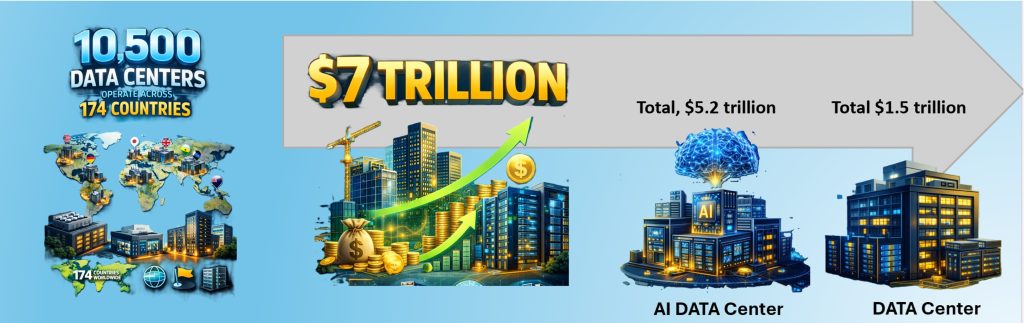
This data center boom extends well beyond the technology sector. Real estate developers, utilities, governments, and environmental stakeholders are all deeply invested in the outcome. For some policymakers, data centers represent strategic, even geopolitical infrastructure. Others raise urgent concerns about grid stability, energy availability, and environmental impact. Today, more than 10,500 data centers operate across 174 countries, and that global footprint continues to expand rapidly.
By 2030, global demand for data center capacity is expected to nearly triple. Over the remainder of the decade, companies worldwide are projected to invest close to $7 trillion in building new facilities and upgrading existing ones. Power consumption alone illustrates the magnitude of this shift: global data center electricity usage is forecast to reach 219 gigawatts within five years, enough energy to power roughly 180 million U.S. homes.
According to McKinsey, keeping pace with AI-driven compute demand will require approximately $6.7 trillion in capital investment by 2030. Of that total, $5.2 trillion will be directed toward data centers capable of supporting AI workloads, while another $1.5 trillion will go toward facilities running traditional IT applications. These figures underscore the scale of the transformation underway, and why power efficiency, operational intelligence, and energy optimization have become mission-critical priorities.
Looking further ahead, Deloitte projects that power demand from AI data centers in the United States alone could increase more than thirtyfold by 2035, rising from just 4 gigawatts in 2024 to approximately 123 gigawatts. At the same time, Big Tech hyperscalers are racing to construct gigawatt-scale AI data centers, with multiple facilities expected to exceed 1 GW of capacity by 2026, each consuming power comparable to that of a nuclear reactor. Yet infrastructure realities are beginning to constrain AI ambitions. A projected 19-gigawatt gap between new data center demand and available grid capacity threatens to slow deployments and expose inefficiencies across power and cooling systems.
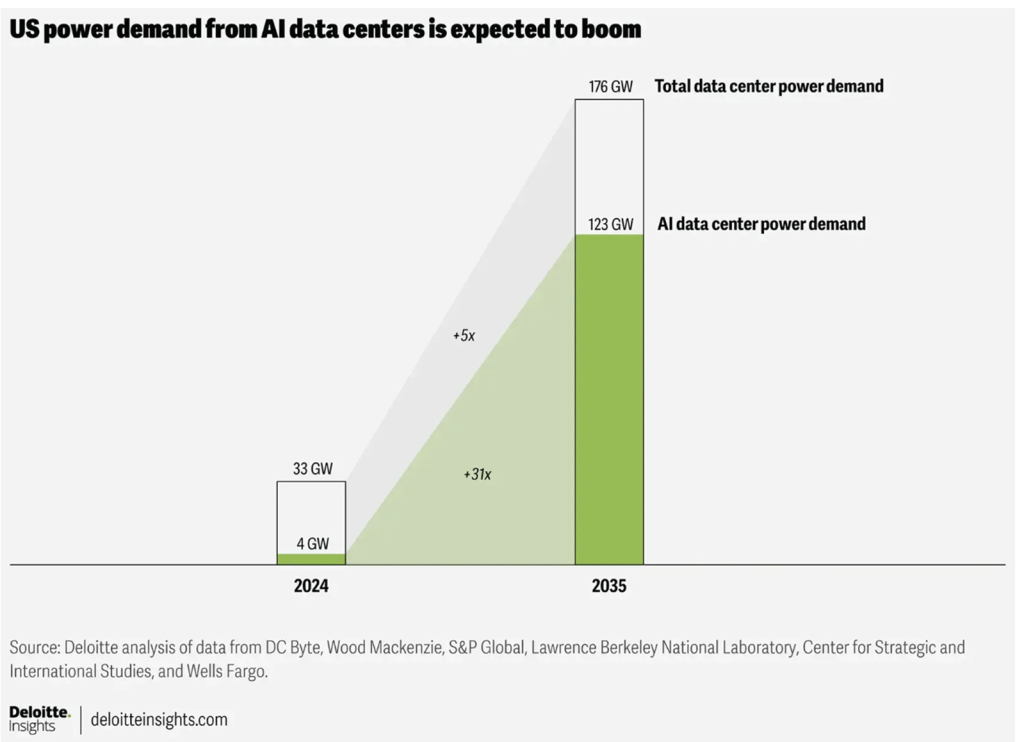
https://action.deloitte.com/insight/4718/ai-data-centers-jolt-power-demand
AI data centers themselves represent a new class of infrastructure. They are designed to support ultra-high-density compute environments, advanced cooling technologies, high-performance networking, and sophisticated management platforms capable of efficiently handling extreme power and thermal loads. As Bloomberg described it, 2024 marked the beginning of a “data center gold rush,” with leading technology companies investing as much as $200 billion in a single fiscal year to keep pace with surging AI demand.
As data centers grow in scale, density, and operational complexity, energy management can no longer be treated as a secondary concern or a post-process reporting function. Operators require continuous, real-time visibility into power consumption, thermal conditions, and infrastructure performance, along with the ability to analyze trends, identify inefficiencies, and take action before constraints impact availability, reliability, or cost. ADISRA SmartView and InsightView address this need through an integrated energy management approach that combines on-premise HMI/SCADA for real-time monitoring and control with cloud-based analytics, enabling smarter decisions, optimized energy usage, and resilient data center operations at scale.

ADISRA SmartView: Real-Time Power and Environmental Control at the Data Center
ADISRA SmartView provides real-time monitoring, control, and optimization of power and environmental conditions across data center infrastructure. Temperature and humidity directly impact equipment reliability, performance, and lifecycle. Elevated temperatures increase thermal stress on servers and networking equipment, while improper humidity levels can cause condensation, corrosion, or electrostatic discharge. Continuous monitoring and closed-loop control are therefore essential to maintaining stable operating conditions.
ADISRA SmartView integrates real-time temperature and humidity sensors to enforce defined operating envelopes and respond immediately to deviations. Alarms, control actions, and rule execution are driven by live data, enabling corrective action before environmental thresholds are exceeded and reducing the risk of equipment failure.
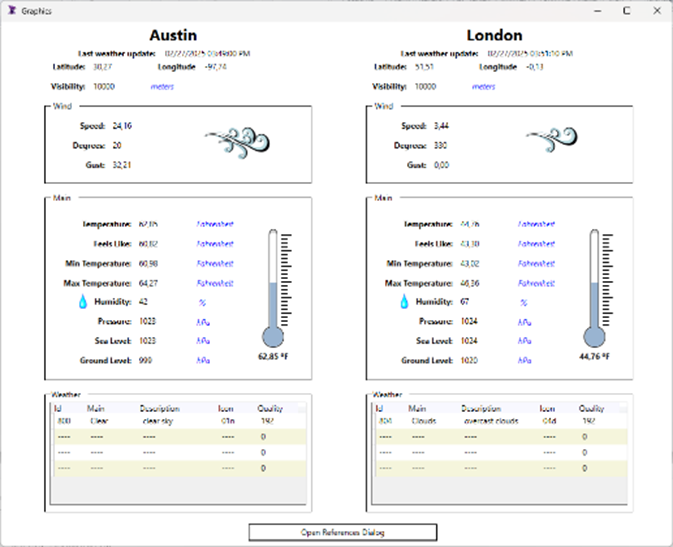
Environmental control decisions directly influence energy efficiency. Adjusting cold-aisle temperature setpoints through ADISRA SmartView rule-based expert system alters the cooling load distribution across chillers, cooling towers, heat exchangers, and pumps, often producing nonlinear efficiency effects. ADISRA SmartView incorporates ambient conditions through its OpenWeather API, using real-time, historical, and forecast weather data to dynamically adjust cooling strategies and optimize energy consumption.
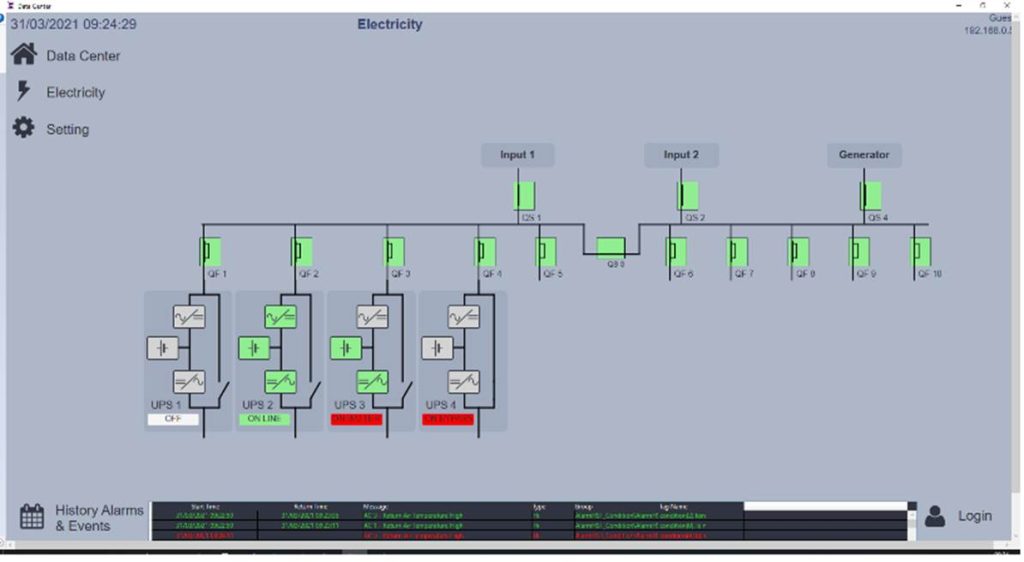
Power system stability is equally critical. ADISRA SmartView monitors electrical parameters across utility feeds, UPS systems, power distribution units (PDUs), and backup generators to ensure continuous operation. Real-time power analytics enable early detection of anomalies such as voltage sags, surges, frequency deviations, and load imbalances. When abnormal conditions are detected, ADISRA SmartView can trigger alarms, execute control logic, or initiate automated responses to minimize operational impact.
Power disturbances caused by grid instability, lightning, or equipment faults are identified through continuous monitoring and evaluated using ADISRA SmartView’s built-in expert system. This enables rapid response to power quality issues and reduces the likelihood of unplanned outages or equipment damage.
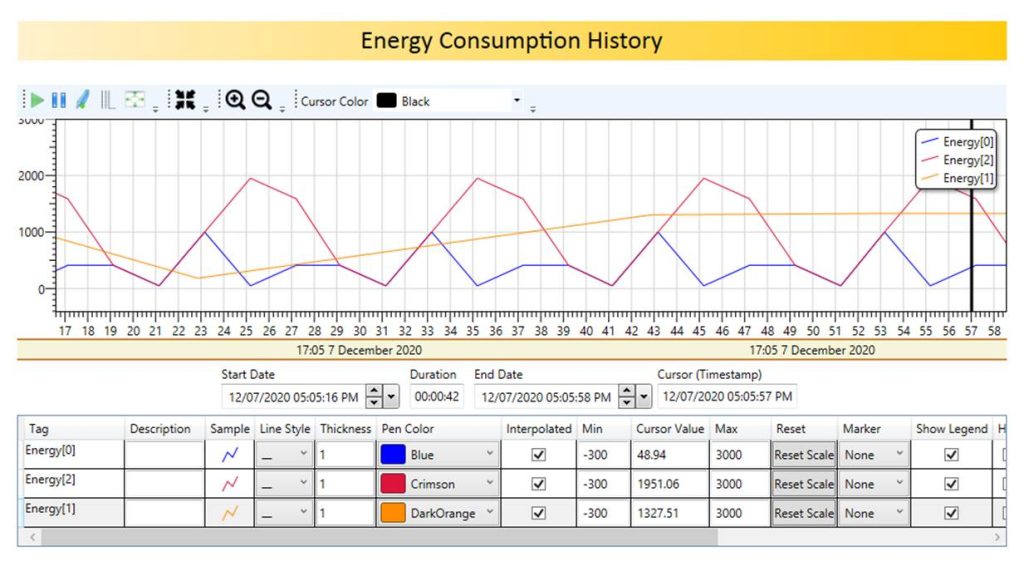
Server health monitoring is integrated into the same operational framework. ADISRA SmartView continuously tracks CPU utilization, memory usage, storage performance, and network throughput. Rule-based logic identifies abnormal behavior, sustained overloads, or failure precursors. For example, sustained CPU utilization above defined thresholds can trigger alerts or initiate workload redistribution to prevent thermal or performance degradation.
While HMI/SCADA control provides the immediacy required to maintain stable and efficient data center operations, long-term optimization requires a broader analytical perspective. Patterns in energy consumption, cooling efficiency, and infrastructure performance emerge over time and across facilities, insights that cannot be fully realized at the site level alone. By extending operational data from ADISRA SmartView into the cloud, InsightView enables advanced energy analytics, multi-site visibility, and data-driven optimization at scale.
Download ADISRA SmartView here.
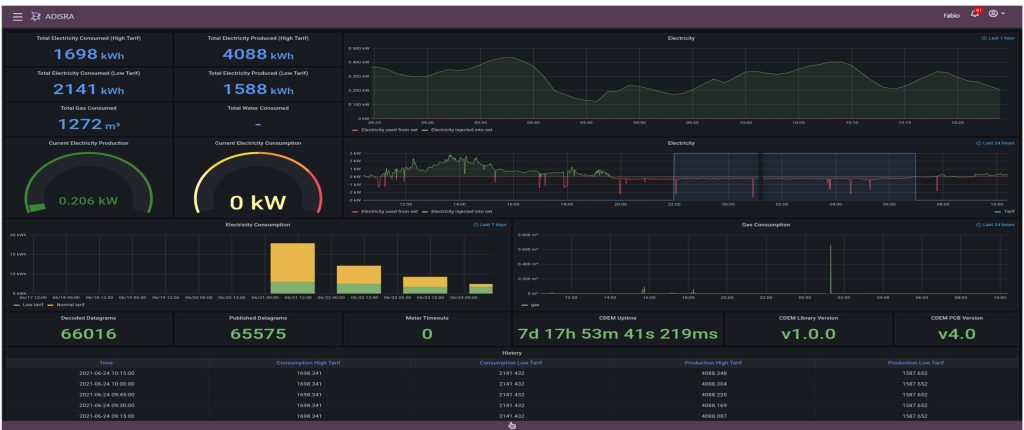
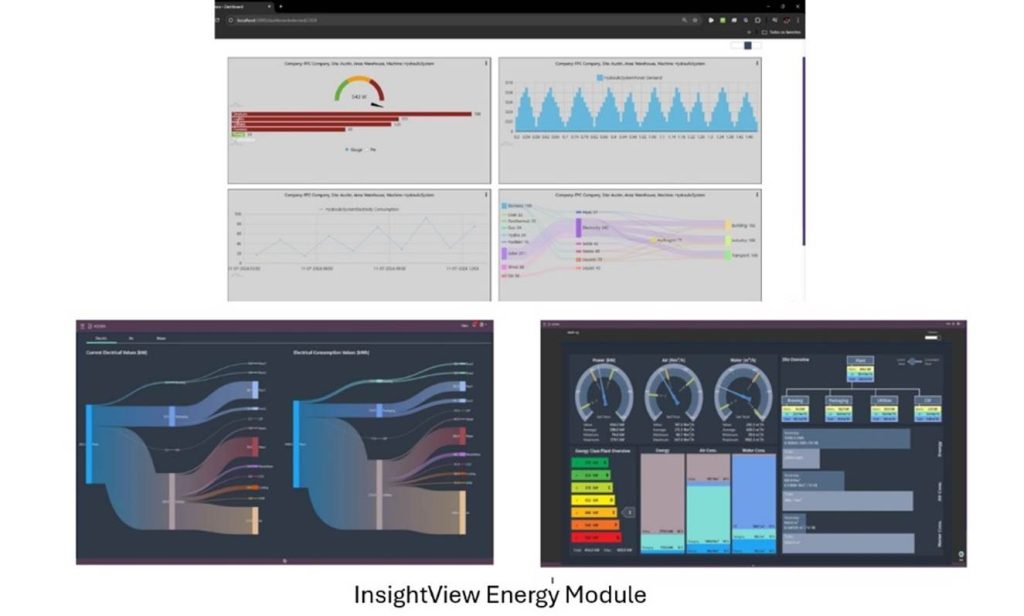
InsightView Energy Module: Cloud-Based Analytics for Scalable Data Center Energy Optimization
To extend operational intelligence beyond the facility, ADISRA SmartView securely publishes selected real-time and contextual data to the cloud, where InsightView’s energy module applies advanced analytics, long-term trending, and cross-site comparison. Together, ADISRA SmartView and InsightView form a unified energy and operations platform, linking deterministic, real-time control at the data center edge with cloud-scale analytics required to operate high-density AI infrastructure reliably and efficiently.
InsightView is designed to analyze energy and operational performance, and can be used for AI data center infrastructure, providing deep visibility into power consumption, cooling efficiency, utilization patterns, and system behavior over time. Intuitive, customizable dashboards enable operators to monitor key performance indicators, including power utilization trends, thermal stability, and energy intensity, at the rack, row, room, or facility level.
Built as a cloud-native platform, InsightView enables centralized visibility across multiple data centers, availability zones, or campuses. Its software-as-a-service (SaaS) delivery model simplifies deployment, reduces operational overhead, and supports rapid scaling as AI capacity expands. Continuous updates ensure operators benefit from evolving analytics capabilities without disrupting operations.
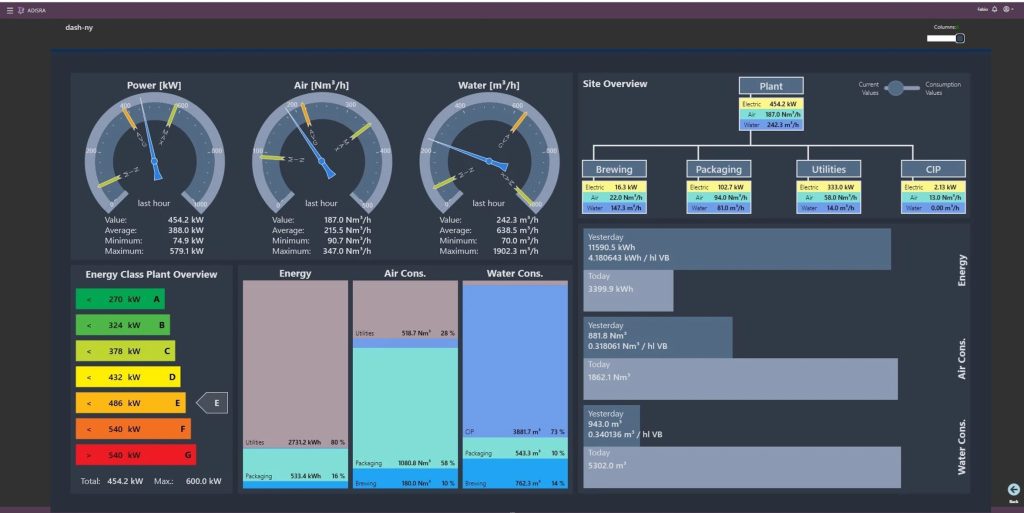
InsightView’s energy management module is optimized for environments where power availability is a limiting factor. It supports demand-aware energy analysis, enabling operators to align compute workloads, cooling strategies, and energy-intensive operations with real-time conditions and grid constraints. By identifying opportunities to shift or optimize loads, InsightView helps reduce peak demand exposure, control operating costs, and improve overall energy efficiency without compromising performance.
The platform continuously collects and analyzes energy data from multiple sources, including electrical feeds, cooling systems, and facility infrastructure, combining real-time telemetry with historical context. This enables the detection of anomalies, the identification of inefficiencies, and the early recognition of emerging risks, supporting proactive decision-making in power-constrained AI environments.
As rising power demand, sustainability requirements, and grid limitations reshape the future of AI infrastructure, effective energy management is becoming a strategic capability rather than an operational afterthought. InsightView enables data center operators to move from reactive monitoring to data-driven energy optimization, supporting resilient operations, higher utilization of available power, and long-term scalability in the era of AI-driven computing.
Request a temporary InsightView account at info@adisra.com.
Conclusion
AI-driven data centers are pushing power, cooling, and infrastructure limits faster than traditional operational models can adapt. As rack densities increase and energy availability becomes a defining constraint, success is no longer measured by how quickly facilities can be built, but by how intelligently they can be operated.
ADISRA SmartView and InsightView deliver an integrated energy management architecture designed for this new reality. By combining deterministic, real-time HMI/SCADA control at the data center edge with cloud-based analytics and multi-site visibility, operators gain the insight required to optimize power usage, improve cooling efficiency, and scale AI infrastructure without sacrificing reliability or cost control.
As AI continues to accelerate, energy and operational intelligence will define the next generation of data center leaders. Now is the time to move beyond reactive monitoring and adopt an intelligent, data-driven approach to energy management.
Ready to Try ADISRA SmartView?
You can download the software here and explore the powerful features of ADISRA SmartView at your own pace.
Interested in a personalized demo tailored to your application? Schedule a one-on-one session with our team here.
If you would like an InsightView account to test the energy management module, request one at info@adisra.com.
If you would like to learn more about ADISRA SmartView, we invite you to attend our live webinar:
Live Webinar: Unlock the Next Level of Industrial Efficiency with ADISRA SmartView
As industrial organizations look ahead to 2026, many are reassessing how efficiently their operations truly perform. Aging HMI/SCADA systems, siloed data, and rigid architectures often restrict visibility, slow decision-making, and make scaling more complex than necessary. Achieving modern efficiency requires more than incremental improvements; it demands a flexible, future-ready platform built for today’s industrial environments.
Join the ADISRA team for a live webinar demonstrating how ADISRA SmartView enables system integrators, OEMs, and industrial operators to streamline development, unify operational data, and confidently scale industrial applications.
In this session, you will learn how ADISRA SmartView supports:
- Simple, secure, and scalable architectures for edge and control room applications
- Rapid application development using reusable templates and runtime configuration
- Seamless data collection from multiple hardware devices through built-in drivers, eliminating data silos
- Stronger, data-driven decision-making with integrated trending, logging, and analytics
Whether you are modernizing existing systems or designing next-generation industrial applications, this webinar will provide practical insights to help you move beyond legacy limitations and achieve measurable efficiency gains.
Date: Thursday, January 29, 2026
Time:
9:30 a.m. CST
10:30 a.m. COT
12:30 p.m. BRT
3:30 p.m. UTC/GMT
4:30 p.m. CET
5:30 p.m. EET
11:30 a.m. MYT (January 30, 2026)
Please reserve your spot and join us live here.
Register here:
ADISRA®, ADISRA’S logo, InsightView®, and KnowledgeView® are registered trademarks of ADISRA, LLC.
© 2026 ADISRA, LLC. All Rights Reserved.