
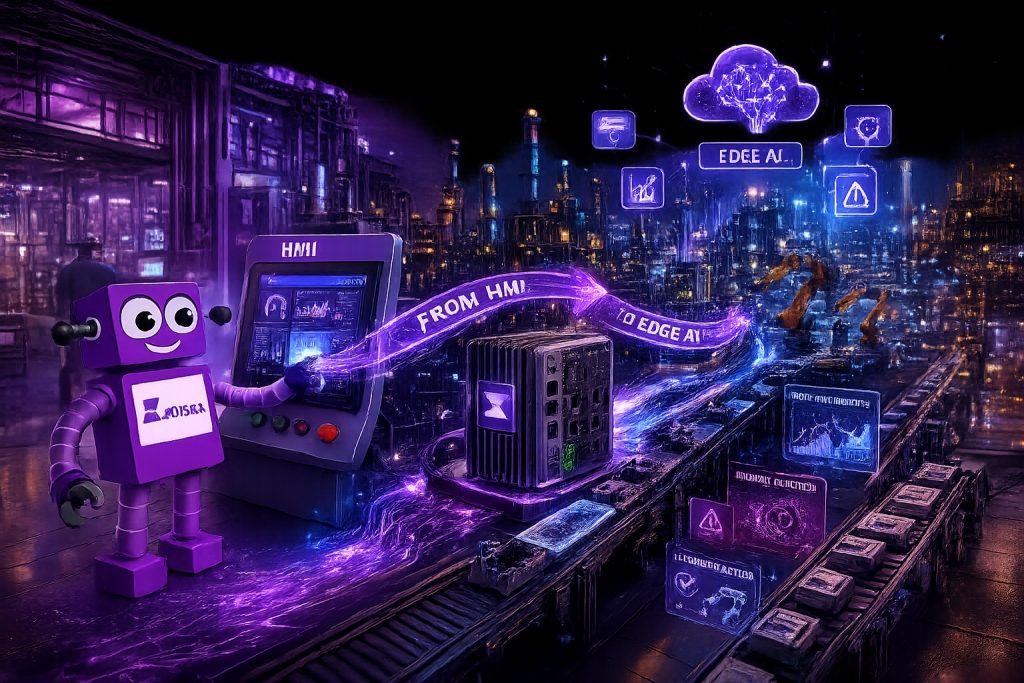
Convergence continues to accelerate across the industrial landscape, where Human-Machine Interfaces (HMIs) and edge computing are no longer separate layers, but are increasingly unified into a new class of intelligent systems. This evolution is giving rise to Edge AI-enabled HMIs, transforming traditional operator interfaces into powerful, distributed computing platforms at the machine level.
Historically, HMIs were designed for visualization, operator interaction, and basic supervisory control. Edge computing, in contrast, focuses on localized data processing, protocol translation, and reducing latency by keeping computation close to industrial assets. Today, these roles are converging. Modern HMI platforms can now run analytics, rule-based logic, and even AI models directly at the edge, eliminating delays, reducing cloud dependency, and enabling faster, more autonomous decision-making. While the Industrial Internet of Things (IIoT) enables connectivity across systems, real-time intelligence is increasingly shifting to the edge, directly within the HMI.
In this new paradigm, the HMI is no longer just a window into operations; it becomes an active participant. With embedded intelligence at the edge, these systems can detect anomalies, predict failures, and guide operators in real time, fundamentally reshaping how industrial processes are monitored, managed, and optimized.
HMI: From Visualization to Intelligent Operations
In industrial automation, Human-Machine Interfaces (HMIs) have long played a critical role in enabling efficient and reliable operations. They serve as the primary connection between people and machines, providing real-time visualization, alarms, and control capabilities that allow operators to make informed decisions and respond quickly to changing conditions.
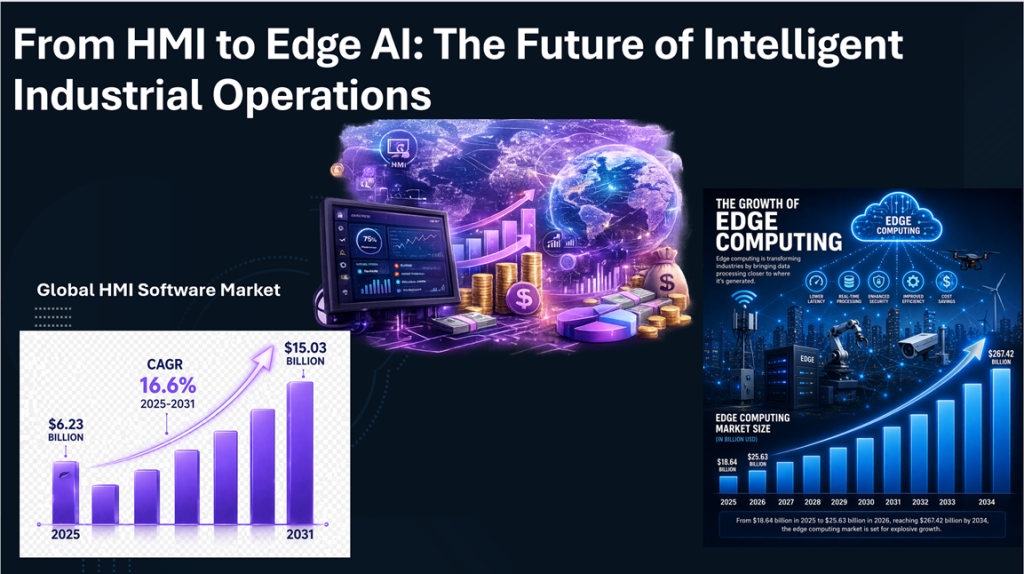
The global HMI software market is experiencing strong growth, projected to expand from $6.23 billion in 2025 to $15.03 billion by 2031. This momentum is driven by increasing demand for operational efficiency, remote monitoring, and the continued adoption of Industry 4.0 standards. These are not short-term trends; they signal a fundamental shift toward more connected, data-driven industrial environments.
As this shift accelerates, HMI software is evolving beyond traditional static displays into dynamic, data-centric platforms. Modern HMIs are beginning to incorporate analytics, rule-based logic, and artificial intelligence, enabling them not only to present information but to interpret it. This marks a transition from passive visualization tools to intelligent systems that actively guide operators and enhance decision-making.
At the same time, edge computing is redefining where and how HMI software delivers value. By moving processing closer to machines and operators, edge architectures enable real-time insights without the latency and dependency of cloud-based systems.
This shift allows HMI software to become an active component of operations at the edge. With local processing capabilities, modern HMIs can continuously monitor conditions, trigger immediate responses, and support advanced use cases such as predictive maintenance and anomaly detection. The result is faster decision-making, improved responsiveness, and greater operational efficiency.
By combining visualization, control, and localized intelligence, HMI software at the edge is emerging as a critical foundation for modern industrial systems, powering smarter, more resilient, and increasingly autonomous operations.
The growth of edge computing reinforces this transformation. The market is projected to expand from $18.64 billion in 2025 to $25.63 billion in 2026, reaching $267.42 billion by 2034, highlighting the rapid shift toward distributed, real-time industrial architectures.
Edge AI HMIs: Defining the Next Generation of Industrial Intelligence
In 2026, Edge AI HMI software represents a fundamental shift in industrial architecture, bringing intelligence directly to the machine level. Rather than relying on centralized cloud processing, modern HMIs now execute analytics, rule-based logic, and AI models locally on edge devices, embedded systems, or industrial PCs on the factory floor.
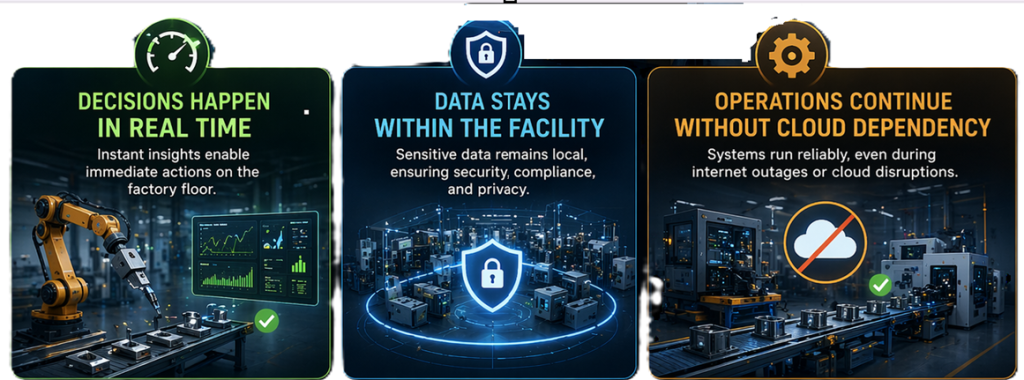
This transformation is reshaping how industrial systems operate:
– Decisions happen in real time
– Data stays within the facility
– Operations continue without cloud dependency
By moving intelligence to the edge, HMIs eliminate latency, reduce bandwidth requirements, and significantly improve data privacy. More importantly, they enable a new class of responsive, autonomous systems that can act instantly on live operational data.
One of the most impactful advancements is the rise of proactive and adaptive user experiences. Traditional HMIs required operators to search for information—navigating screens, filtering alarms, and interpreting data manually. In contrast, Edge AI HMIs shift toward a “predict and present” model.
Instead of waiting for input, the system anticipates operator needs in real time. Interfaces dynamically adjust based on context—automatically surfacing the most relevant screens, highlighting critical alarms, presenting trends, and guiding users to the next best action. This reduces cognitive load, accelerates response times, and improves operational consistency, especially in high-pressure environments.
For example, if a sensor detects an abnormal vibration pattern in a motor or turbine, the HMI no longer generates an alarm. It can immediately present diagnostic insights, historical trends, and recommended actions, enabling faster and more informed intervention before issues escalate.
At the core of this evolution are several key capabilities:
– On-Device AI and Low Latency
Processing data directly at the machine enables near-instantaneous insights and removes reliance on cloud connectivity.
– Embedded Predictive Analytics
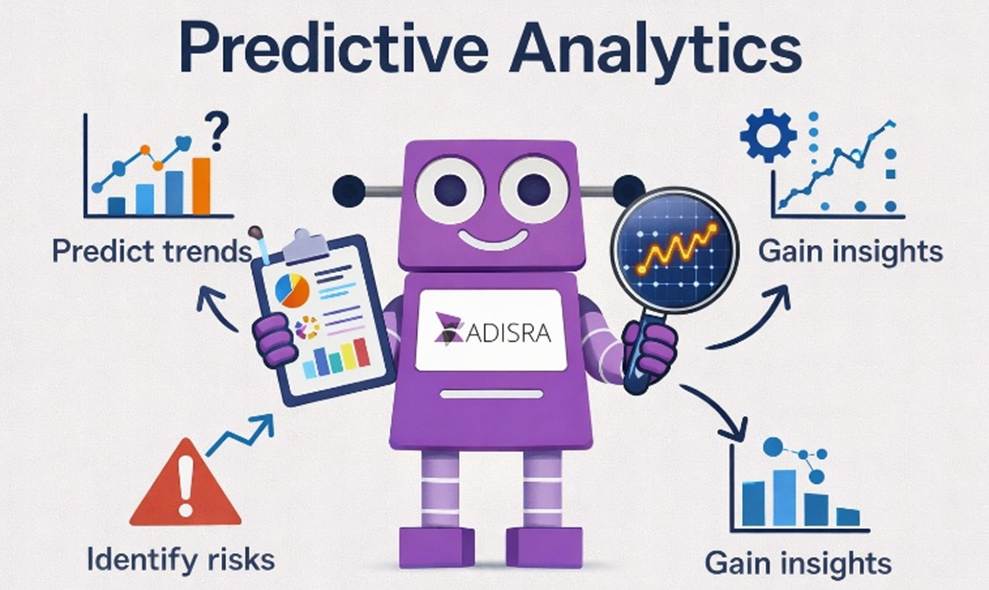
HMIs can detect anomalies, predict failures, and even trigger automated responses, supporting use cases like predictive maintenance and real-time quality control.
– Context-Aware, Adaptive Interfaces
Screens, alarms, and navigation dynamically adjust based on operator role, task, and system conditions, delivering only the most relevant information when it matters most.
– Enhanced Security and Data Privacy
Keeping data local reduces exposure to external threats while supporting secure, resilient operations in regulated or sensitive environments.
– Software-Defined and Modular Architecture
Modern HMIs are no longer tied to fixed hardware. They are flexible, software-driven platforms that can be updated, configured, and scaled to meet evolving operational needs.
Together, these capabilities redefine the role of the HMI, from a passive interface to an intelligent, decision-support system at the edge. As industrial environments continue to demand faster, smarter, and more autonomous operations, Edge AI HMIs are emerging as a critical foundation for the next generation of digital transformation.
How Edge AI Is Transforming Factory Operations
Edge AI is no longer a future concept; it is already being deployed across modern manufacturing environments. The most impactful use cases focus on speed, accuracy, and operational efficiency, with many organizations adopting hybrid architectures that combine cloud systems with edge intelligence.
What is changing is not just where data is processed, but how quickly systems can respond and adapt in real time. Increasingly, the HMI serves as the interface and decision layer that brings these capabilities together for operators.
Some of the most common applications include:
– Real-Time Quality Inspection
Machine vision systems powered by Edge AI can detect defects instantly during production. Instead of relying on batch inspection, manufacturers can identify and address quality issues as they occur.
This reduces scrap, improves product consistency, and enables immediate corrective action, minimizing downstream impact.
– Predictive Maintenance at the Machine Level
Edge AI models can analyze vibration, temperature, and other machine signals directly at the source to detect early signs of failure.
Because processing occurs locally, alerts are generated in real time without transmitting large datasets to external systems, enabling faster intervention and reduced downtime.
– Adaptive Machining and Process Control
Advanced systems can dynamically adjust feeds, speeds, and toolpaths based on live operating conditions.
This enables machines to respond to material variation, tool wear, and unexpected process changes, improving efficiency, extending equipment life, and reducing the need for manual intervention.
– Autonomous and Intelligent Robotics
Robots equipped with Edge AI can make decisions based on real-time sensor input and environmental conditions.
This is especially valuable in applications such as bin picking, assembly, and flexible automation, where variability is high and pre-programmed logic alone is not sufficient.
Enabling Edge AI HMI with ADISRA SmartView
As industrial systems evolve toward edge intelligence, the need for a flexible, real-time decision layer becomes critical. ADISRA SmartView is designed to meet this need, providing a modern HMI/SCADA platform that enables intelligent, edge-based operations without adding unnecessary complexity.
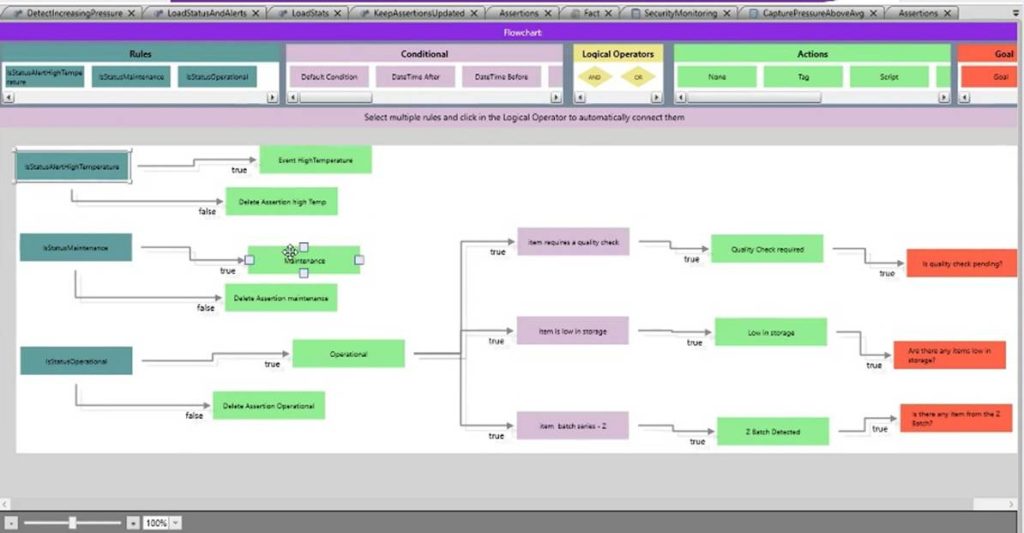
At its core, ADISRA SmartView allows users to build and deploy rule-based expert systems directly within the HMI environment. This enables embedding operational intelligence at the machine level, supporting use cases such as predictive maintenance, anomaly detection, and real-time decision support without relying solely on cloud-based analytics.
With broad interoperability, the platform connects seamlessly to PLCs, databases, and third-party systems across both OT and IT environments. Support for protocols such as Modbus TCP, Siemens, Mitsubishi, OPC UA, MQTT, and standard web and database interfaces ensures that data can be collected, contextualized, and acted upon in real time at the edge.
From Monitoring to Intelligent Action
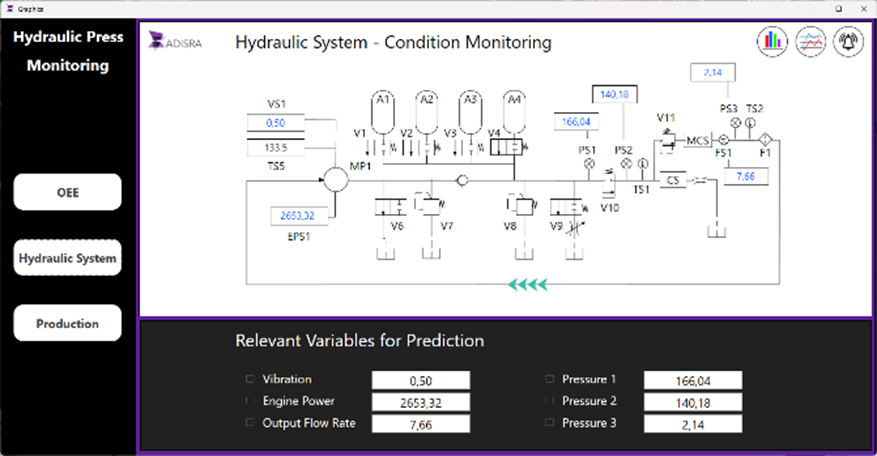
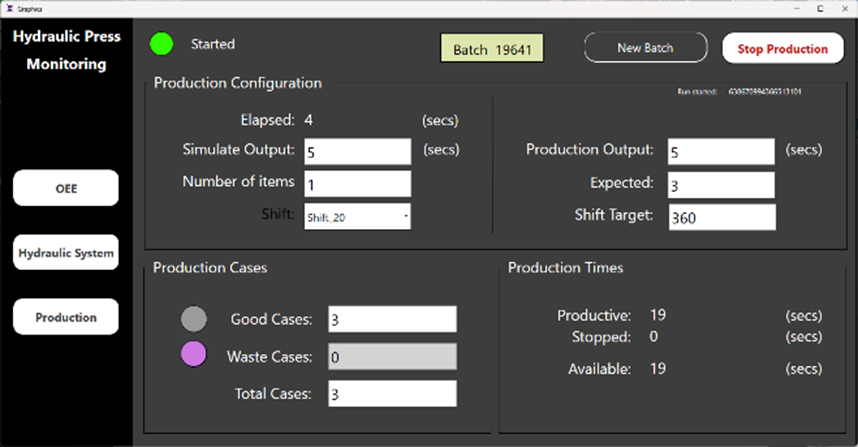
Consider a common industrial scenario: monitoring a motor’s health. With ADISRA SmartView, operators can define rules based on key indicators such as temperature, vibration, current draw, and runtime. When abnormal conditions are detected, the system can immediately respond, triggering alarms, logging events, and notifying maintenance teams.
For example, a rule-based condition might include:
Voltage imbalance between motor phases exceeding a defined threshold
Current deviation across phases indicates irregular load
A sustained increase in motor temperature over time
When these conditions occur together, the HMI can identify a potential electrical imbalance and automatically initiate the appropriate response, surfacing diagnostics, logging the event, and prompting maintenance action before failure occurs.
Why Rule-Based Intelligence Matters at the Edge
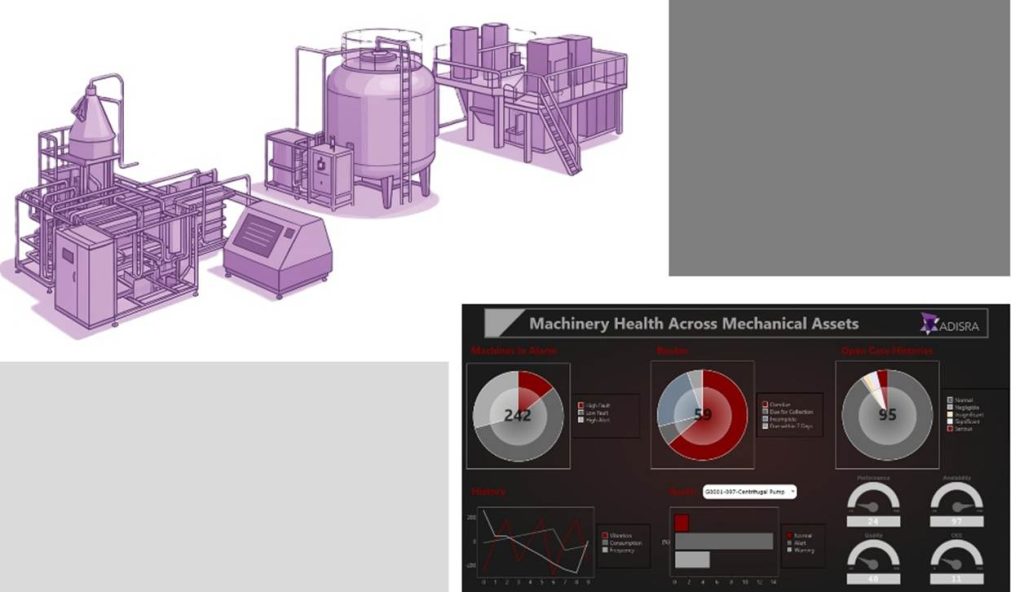
Rule-based systems play an important role in Edge AI HMI environments because they provide:
Transparency – Decision logic is explicit and easy to understand
Speed – Immediate response without the need for external processing
Consistency – Reliable, repeatable outcomes across operations
Flexibility – Rules can be quickly updated as operational knowledge evolves
These characteristics make rule-based logic especially effective for well-defined conditions and critical assets where fast, deterministic responses are required.
Extending Beyond Rules with AI
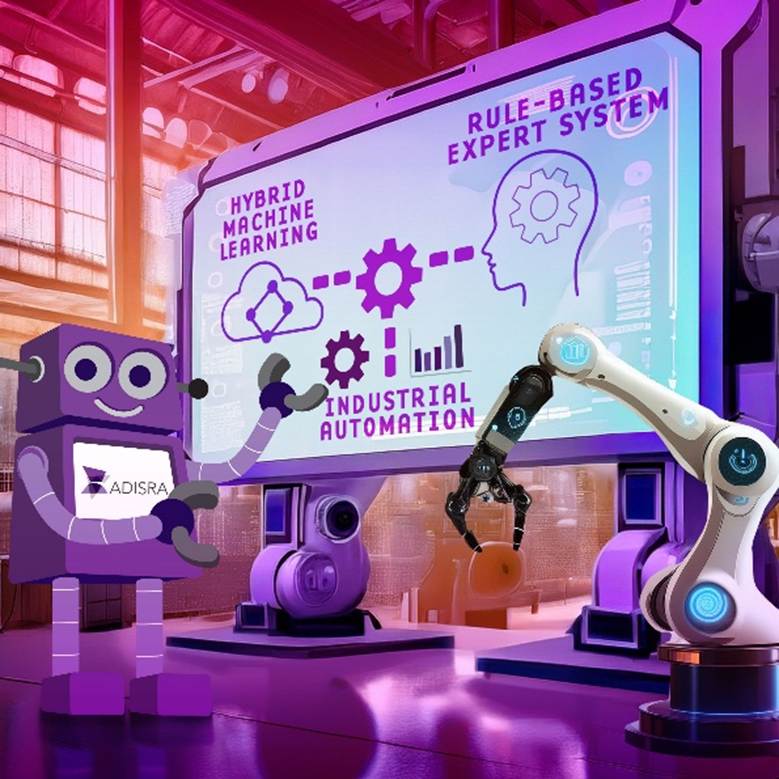
While rule-based systems are powerful, they are inherently static; they do not adapt unless updated. As industrial environments become more complex, machine learning adds value.
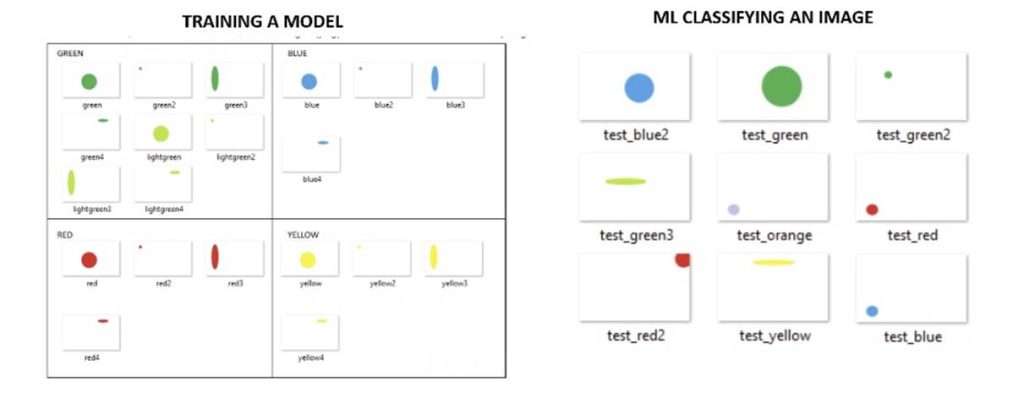
By combining rule-based logic with machine learning models, organizations can move beyond predefined thresholds to detect patterns, identify subtle anomalies, and continuously improve. This hybrid approach, rules for guardrails, and AI for adaptability, represent the next step in the evolution of Edge AI HMI.
Together, these capabilities enable manufacturers to shift from reactive operations to predictive and increasingly autonomous systems, reducing downtime, extending asset life, and improving overall efficiency.
You can download the software here and explore the powerful features of ADISRA SmartView at your own pace.
The Future of HMI Is Intelligent, and It is at the Edge
The convergence of HMI and edge computing is redefining the role of industrial software. What was once a visualization layer is now becoming an intelligent, real-time decision engine capable of analyzing data, guiding operators, and responding to conditions in real time.
Edge AI HMIs represent a fundamental shift in how industrial systems are designed and operated. By bringing intelligence directly to the machine level, manufacturers can reduce latency, improve security, and enable faster, more autonomous decision-making. The result is not just better visibility, but smarter, more responsive operations.
For OEMs, system integrators, and manufacturers, this evolution presents a clear opportunity: move beyond traditional architectures and embrace platforms that unify visualization, control, and intelligence at the edge.
ADISRA SmartView is built for this new reality, empowering teams to develop scalable, intelligent HMI/SCADA applications that support real-time analytics, rule-based decision-making, and the foundation for AI-driven operations.
Ready to Take the Next Step?
If you are looking to modernize your HMI/SCADA strategy and bring intelligence closer to your operations, now is the time to explore what is possible.
– Download a free trial of ADISRA SmartView here and start building your Edge AI HMI applications today.
Or connect with our team here to see how you can accelerate your journey toward smarter, more autonomous industrial systems.
ADISRA®, ADISRA’S logo, InsightView®, and KnowledgeView® are registered trademarks of ADISRA, LLC.
© 2026 ADISRA, LLC. All Rights Reserved.